


Candy Crush Saga
King
I first came back to Candy Crush Saga expecting a quick match-three distraction, but its strongest quality is not simply that it is easy to start. It has a very deliberate mood: bright candy colors, playful board layouts, cheerful sound effects, and a steady sense of forward movement. The result is a casual game that feels welcoming in short sessions while still giving each level enough personality to make the next one tempting.
That balance explains why King’s game has remained so visible for so long. It is free to play, available to players rated Everyone, and has grown beyond a billion installs. Those numbers do not automatically make a game enjoyable, of course, but they do reflect how accessible the basic idea is. I can hand it to someone who rarely plays games and explain the first move almost immediately.
My overall impression is positive, with an important qualification: this is best when treated as a relaxed puzzle habit rather than a challenge to rush through. The early boards are friendly, but later progress can ask for patience, careful planning, and sometimes a willingness to wait or consider an in-app purchase. If you want a calm, colorful game for spare moments, it is an easy recommendation. If you dislike repeated attempts, limited resources, or monetization pressure in free games, the experience may wear thin.
Related News

Candy Crush Saga Is Forgiving Until Failure Becomes Unclear

Candy Crush Saga: Your Go-To Digital Escape

Embracing Digital Minimalism with Files by Google
A colorful world that teaches you how to look at the board
The setting is built around a candy-themed journey, but the art direction does more practical work than simply decorating the screen. The sweets are large, distinct, and visually separated, so the board communicates its rules at a glance. That matters on a small phone display, especially when I am playing one-handed or checking the game for only a minute between other tasks.
Each level presents a compact visual problem. I am not reading long instructions or learning a complicated control scheme; I am scanning colors, spotting possible matches, and deciding whether a move creates a useful chain. The bright presentation makes that process feel light, even when the underlying decision is more demanding than it first appears.
Related News

Why WhatsApp Messenger Still Makes Everyday Communication Feel Easy

Jurassic World: The Game Is the Better Dino Tycoon for Strategic Players

Threads in Real Life: Who Should Join, Lurk, or Leave

How SHEIN Turned Shopping Into an Endless Content Feed

How to Make Fortnite Feel Smarter on Mobile

Should You Switch to Microsoft Outlook on Mobile?
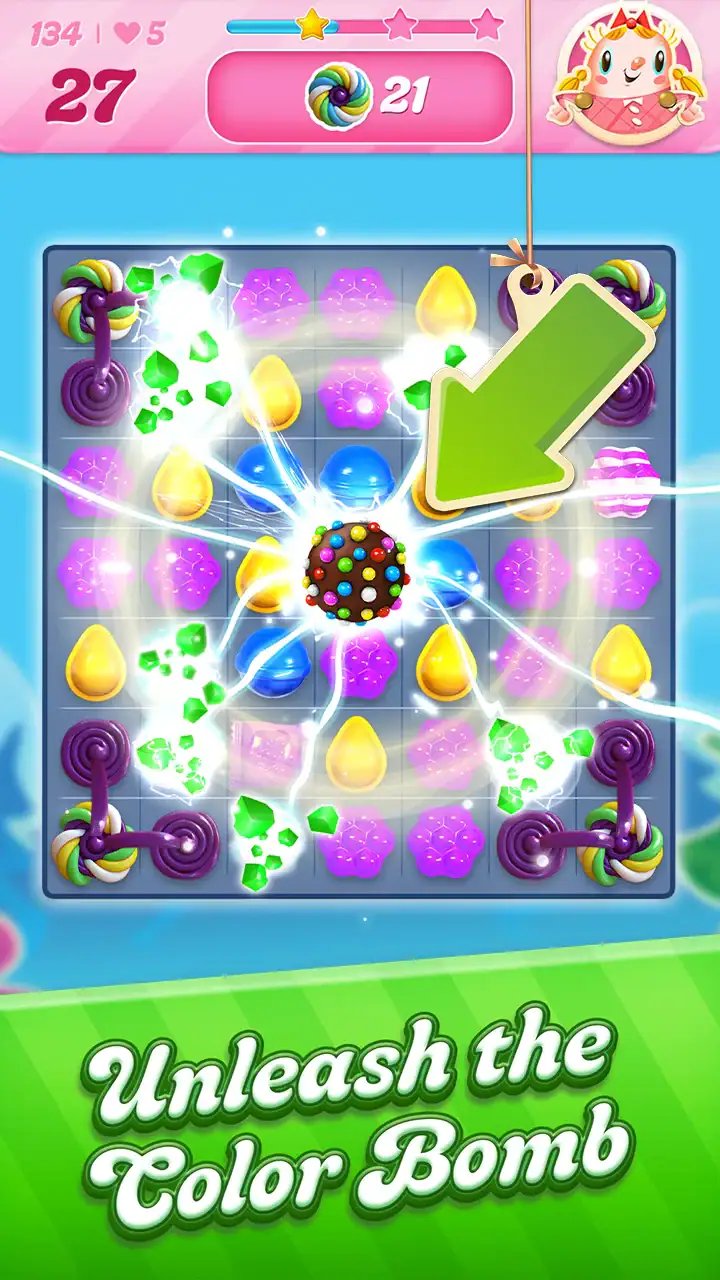
The game’s visual language also helps the special candies stand out. When a move creates a stronger effect, the board gives me a clear visual reason to notice it. That feedback encourages experimentation without requiring a tutorial every time. I can learn by watching what changes after a move, which is one reason the game works well for newcomers.
What I appreciate most is the way the candy theme keeps the puzzles from feeling like an abstract grid. The boards have a sense of place within the larger journey, and the transitions between stages give progress a gentle narrative shape. It is not a story-heavy game, and I would not choose it for character development or dramatic writing. Its world exists mainly to make a sequence of puzzles feel like a trip rather than a menu of disconnected tasks.
That visual consistency has a trade-off. The sweetness is constant. If you prefer restrained design, realistic settings, or a darker atmosphere, the cheerful presentation may feel too loud after a while. I also find that the colorful effects can make a successful move feel more exciting than the strategic value of that move really was. The game is good at celebrating action, so I have to remain disciplined and look at the board rather than simply chase the most spectacular animation.
Gallery
Why the presentation helps in everyday play
A realistic use case is a short wait at a bus stop or a few quiet minutes before an appointment. I can open a level, understand the board quickly, make a few deliberate moves, and stop without needing to remember a complicated control sequence. The visual clarity is especially useful in those moments because I can resume attention immediately after looking away.
It also works for players sharing a phone informally. Someone can watch a board and suggest a move without knowing the whole game. That makes it more approachable than puzzle games whose appeal depends on a large rulebook or a deep strategic vocabulary. The candy theme is not just a cosmetic choice; it lowers the social and mental barrier to joining in.
For children, the Everyone rating makes the tone broadly suitable, but I would still pay attention to the free-to-play structure. A child may understand the matching quickly without understanding why an extra move or a helpful item can cost money. The bright, rewarding presentation can make those offers feel like part of the fun rather than a spending decision, so adult guidance is sensible.
Sound, rhythm, and the feeling of one more level
The audio design supports the same mood as the artwork. Matches, combinations, and level events receive immediate sound feedback, giving every move a small sense of consequence. I find this useful because the sounds confirm what happened without forcing me to inspect every tile closely. The board becomes something I can partly read through rhythm as well as color.
That rhythm is central to the game’s appeal. A simple match produces a quick response, while a larger chain creates a more noticeable burst of activity. The pacing rises and falls naturally: I scan, move, watch the result, and then scan again. Even when the puzzle is simple, that loop gives the session a pleasant pulse.
The audio also makes the game feel more generous than a silent puzzle grid. A successful combination is not merely recorded; it is presented as a little event. I enjoy that during casual play, particularly when I am tired and want something responsive rather than mentally austere.
At the same time, the sound can become repetitive during longer sessions. I often prefer to lower the volume when playing for more than a few levels, especially in public places. That does not damage the core game, because the visual feedback remains strong, but it changes the mood from lively amusement to quiet concentration.
The pacing is similarly effective in short bursts but less comfortable when I try to force a long session. The game repeatedly offers a clear next objective, and that structure makes stopping slightly harder than expected. A level that takes only a few minutes can turn into several attempts because the previous board is still fresh in my mind. I recommend deciding in advance whether I am playing one level or taking a longer break, rather than relying on the game to make that choice for me.
How the rhythm affects concentration
For light relaxation, the steady feedback is a strength. It gives my attention something small and immediate to follow, which is why the game can work well after a busy day. I am not required to absorb a large fictional world or remember a complicated objective before enjoying the next move.
For serious puzzle practice, the celebratory rhythm can be distracting. The game encourages me to enjoy combinations, but the best move is not always the most visually dramatic one. I have learned to pause before moving and ask what the board will look like afterward. That small habit improves my decisions more than chasing every available match.
Simple matching with more planning than the first boards suggest
The central mechanic is immediately familiar: I match candies to clear them and work toward the level’s objective. The controls are simple enough for almost anyone to understand, but the strategic layer grows as boards become less open and opportunities become harder to arrange. The important shift is from asking “What can I match?” to asking “Which match leaves the best board?”
That is where the game becomes more interesting than a purely reflexive time-filler. I need to consider the location of a move, the spaces it will open, and whether clearing one area helps or prevents progress somewhere else. The board is small, but the consequences of a move can spread across it. I enjoy that the game makes planning feel optional at first and increasingly useful later.
One practical tip is to inspect the entire board before making the obvious match near the top. A quick match may be available, but a less immediate move lower down can create a better chain or open a blocked section. I do not solve every level this way, yet the pause prevents many unnecessary mistakes.
Another useful habit is to protect promising arrangements instead of clearing everything immediately. When I see a chance to create a special candy, I try not to break the setup with a convenient but unhelpful match. This is a small distinction, but it changes the game from constant tapping into controlled preparation.
I also pay attention to the level objective rather than treating every candy as equally important. Clearing a large number of pieces can feel satisfying, but it may not help if the real task is concentrated in a particular part of the board. The strongest move is often the one that advances the objective directly, even when it produces a smaller visual payoff.
Where the free structure changes the experience
The game costs nothing to start, which is a major reason it is easy to recommend for casual players. However, the free-to-play design affects how I approach difficult levels. Failed attempts can make progress feel slower, and the temptation to use a paid advantage becomes more noticeable when I am close to finishing a board.
In-app purchases range from ninety-nine cents to one hundred forty-nine dollars and ninety-nine cents per item. That broad range is important context for anyone deciding whether the game belongs on a family device or a personal phone. I can enjoy the basic puzzle loop without buying anything, but I would not describe the purchase system as invisible. Players who want a completely uninterrupted, fixed-cost experience may be happier with a premium puzzle game.
My advice is to treat purchases as optional conveniences, not as part of the normal definition of success. Before using one, I ask whether the level is genuinely enjoyable or whether frustration is making me spend. That distinction helps preserve the casual mood the game works so hard to create.
The game is also a poor fit for someone looking for a single, finite campaign with a clear ending. Its appeal comes from continuing through a long sequence of boards, and that ongoing structure can feel repetitive if I need a strong narrative payoff. A traditional puzzle collection may be better for players who want carefully bounded chapters and a sense of completion.
Likewise, fans of competitive action games should not expect quick reflex combat or direct confrontation. The challenge here is visual planning and patience. Compared with other match-three games, its advantage is the polished combination of readable presentation, varied board goals, and a strong progression rhythm. Its disadvantage is that the free structure can make the difficulty feel connected to persistence and resources rather than pure puzzle skill.
Who will get the most from it
I think it suits commuters, casual players, families playing under supervision, and anyone who likes puzzles that can be understood in seconds but revisited with more care. It is especially good for people who want a game that does not demand a long uninterrupted session.
I would suggest skipping it if you become irritated by repeating a level, if colorful reward effects feel overstimulating, or if you want every piece of content to be available through one upfront payment. It is also not my first choice for deep strategic gaming. The later planning is worthwhile, but the overall experience remains designed for broad accessibility rather than specialist mastery.
On supported devices, the minimum requirement is Android 6.0, and the current version is 1.329.0.1. Those details matter for anyone using an older phone, although the more important practical question is whether the device feels comfortable for repeated short sessions. A small screen can still work because the board is clear, but a larger display makes the effects and individual candy patterns easier to inspect.
My verdict on the atmosphere and the lasting appeal
What makes this game endure for me is the coherence between its mechanics and its mood. The candy artwork makes the board inviting, the sound gives each match a satisfying pulse, and the level structure keeps progress moving without demanding a large time commitment. None of those elements would be enough alone, but together they turn a familiar matching formula into a particularly approachable daily pastime.
The atmosphere is happiest when I let it stay casual. I enjoy it most during a short break, with the sound lowered when necessary, and with no expectation that every level should fall immediately. A patient approach also makes the puzzle side more rewarding because I start looking for board-shaping moves instead of reacting to the first match I see.
There are real limitations. The presentation can become overly sweet, the repeated attempts can test my patience, and the purchase options mean that “free” does not always feel frictionless. Players should also be mindful of how easily a short session can extend into another level. Those are not reasons to reject it outright, but they are reasons to set personal boundaries before playing.
For me, the final recommendation is straightforward: this is one of the better choices when I want a polished, friendly casual puzzle game that can fill a few spare minutes and still reward a little planning. King has made the basic interaction accessible without removing all decision-making. If you approach it as a colorful collection of small puzzles rather than an achievement test, the balance feels fairer and the atmosphere remains enjoyable.
I would recommend giving it a try if you like bright presentation, clear goals, and a gentle rhythm of matching, watching, and planning. Just keep purchases optional, pause when the repetition stops being fun, and remember that the most satisfying move is often the one that improves the next turn rather than the one that creates the biggest immediate explosion.
FAQs for Candy Crush Saga
What is Candy Crush Saga and how does it work?
Candy Crush Saga is a popular match-three puzzle game where players swap adjacent candies on a game board to make rows or columns of at least three matching candies. Each level has specific objectives, such as reaching a certain score or clearing jelly-covered candies. As you advance, the game introduces new challenges and power-ups.
Is Candy Crush Saga free to play, and are there in-app purchases?
Candy Crush Saga is free to download and play. However, it offers in-app purchases for items like extra moves, lives, and boosters that can enhance gameplay. While these purchases can help progress through difficult levels, they are entirely optional, and players can enjoy the game without spending money.
Can I play Candy Crush Saga offline?
Candy Crush Saga can be played offline for regular gameplay. However, certain features, such as accessing new levels, events, or syncing progress across devices, require an internet connection. Playing online also allows you to compete with friends and see their progress on leaderboards.
How do I sync Candy Crush Saga progress across devices?
To sync your progress in Candy Crush Saga across multiple devices, you need to connect the game to a Facebook account or a King account. Once connected, your progress will be saved in the cloud, allowing you to continue where you left off on any device by simply logging in with your account.
Are there any tips for progressing in Candy Crush Saga?
Advancing in Candy Crush Saga requires strategy and patience. Focus on completing level objectives rather than just clearing candies. Utilize special candies and combos to clear more of the board. Plan moves ahead and save boosters for particularly challenging levels. Joining events and daily challenges can also provide extra rewards and help progress faster.
Pros
- Addictive gameplay with colorful graphics.
- Easy to learn
- challenging to master.
- Frequent updates with new levels.
- Offline play available for on-the-go fun.
- Compete with friends on leaderboards.
Cons
- In-app purchases can get expensive.
- Lives take time to regenerate.
- Some levels are overly difficult.
- Limited moves can be frustrating.
- Ads can be intrusive at times.


